BLOGGER TEMPLATES AND TWITTER BACKGROUNDS »

Monday, February 10, 2014

February 10: Singer, actress, dancer, and U.S. Ambassador, Shirley Temple Black died on this date in 2014…


-----


… born on April 23, 1928, she was 85-years-old when she passed away.  

Shirley Temple was born on April 23, 1928, in Santa Monica, California. Temple's mother encouraged her infant daughter's singing, dancing, and acting talents, and in September 1931 enrolled her in Meglin's Dance School in Los Angeles.


About this time, Temple's mother began styling her daughter's hair in ringlets similar to those of silent film star Mary Pickford.


In January 1932, Temple was signed by Educational Pictures following a talent search at the dance school. She appeared in a series of one-reelers called Baby Burlesks, and a series of two-reelers called Frolics of Youth playing Mary Lou Rogers, a youngster in a contemporary suburban family.

To underwrite production costs at Educational, Temple and her child co-stars modeled for breakfast cereals and other products. She was loaned to Tower Productions for a small role in her first feature film (Red-Haired Alibi) in 1932 and, in 1933, to Universal, Paramount, and Warner Bros. for various bit parts when she was three-years-old.

In 1934, at the age of four, she found international fame in Bright Eyes, a feature film designed specifically for her talents. She received a special Juvenile Academy Award in February 1935 for her outstanding contribution as a juvenile performer to motion pictures during 1934, and film hits such as Curly Top and Heidi followed year after year during the mid-to-late 1930s.
-----
DID YOU KNOW?

 The Shirley Temple Cocktail is a non-alcoholic mixed drink made with Lemon-Lime soda, grenadine syrup, and garnished with a maraschino cherry. Shirley Temples are often served to children dining with adults in lieu of real cocktails.

-----
Licensed merchandise that capitalized on her wholesome image included dolls, dishes, and clothing. Her box office popularity waned as she reached adolescence, and she left the film industry in her teens. She appeared in a few films of varying quality in her mid-to-late teens, and retired completely from films in 1950 at the age of 22.


Shirley was the top box-office draw four years in a row (1935–38) in a Motion Picture Herald poll.


Temple returned to show business in 1958 with a two-season television anthology series of fairy tale adaptations. She made guest appearances on television shows in the early 1960s and filmed a sitcom pilot that was never released.

Shirley sat on the boards of corporations and organizations including The Walt Disney Company, Del Monte Foods, and the National Wildlife Federation.

Shirley Temple Black served as U.S. ambassador to Ghana and Czechoslovakia. She also served as Chief of Protocol of the United States, 1976–1977. In 1988, she published her autobiography, Child Star.

Temple was the recipient of awards and honors including Kennedy Center Honors and a Screen Actors Guild Life Achievement Award.

Shirley ranks 18th on the American Film Institute's list of the greatest female American screen legends of all time.

She died of natural causes on February 10, 2014, at the age of 85 at her home in Woodside, California.
-----
For more about Shirley, visit her Website at –

http://www.shirleytemple.com

####

Tuesday, January 28, 2014

January 27: American folk singer Pete Seeger died on this date in 2014…


… born on May 3rd, 1919, he was 94–years-old when he died. peacefully in his at New York Presbyterian Hospital, where he had been a patient for six days.

-----

Peter "Pete" Seeger Seeger was born in Manhattan, New York. His family history dated back to the American revolution. Pete's father, the Harvard-trained composer and musicologist Charles Louis Seeger, Jr., established the first musicology curriculum in the U.S. at the University of California in 1913, helped found the American Musicological Society, and was a key founder of the academic discipline of ethnomusicology.

Pete's mother, Constance de Clyver Edson, raised in Tunisia and trained at the Paris Conservatory of Music, was a concert violinist and later a teacher at the Juilliard School.

In 1912, Charles Seeger was hired to establish the music department at the University of California, Berkeley, but was forced to resign in 1918 because of his outspoken pacifism during World War I. When Pete was eighteen months old, the family lived in a trailer and embarked on a mission to bring music to the working people in the American South. Upon their return, Constance taught violin and Charles taught composition at the New York Institute of Musical Art (later Juilliard).

During the summer of 1936, Pete heard the five-string banjo for the first time at the Mountain Dance and Folk Festival in western North Carolina. He spent much of the next four years trying to master the five-string banjo. The teenage Seeger also sometimes accompanied his parents to regular Saturday evening gatherings in Greenwich Village.

A fixture on nationwide radio in the 1940s, he also had a string of hit records during the early 1950s as a member of The Weavers, most notably their recording of Lead Belly's "Goodnight, Irene,” which topped the charts for 13 weeks in 1950. Members of The Weavers were blacklisted during the McCarthy Era. In the 1960s, he re-emerged on the public scene as a prominent singer of protest music in support of international disarmament, civil rights, counterculture, and environmental causes.


Seeger was kept off commercial television for more than a decade after tangling with the House Un-American Activities Committee in 1955.

Repeatedly pressed by the committee to reveal whether he had sung for Communists, Seeger responded sharply: "I love my country very dearly, and I greatly resent this implication that some of the places that I have sung and some of the people that I have known, and some of my opinions, whether they are religious or philosophical, or I might be a vegetarian, make me any less of an American." He was charged with contempt of Congress, but the sentence was overturned on appeal.

 As a song writer, he is best known as the author or co-author of "Where Have All the Flowers Gone?" (with Joe Hickerson), "If I Had a Hammer (The Hammer Song)" (composed with Lee Hays of The Weavers), and "Turn, Turn, Turn!,” which have been recorded by many artists both in and outside the folk revival movement and are still sung throughout the world. "Flowers" was a hit recording for The Kingston Trio (1962); Marlene Dietrich, who recorded it in English, German and French (1962); and Johnny Rivers (1965).

"If I Had a Hammer" was a hit for Peter, Paul & Mary (1962) and Trini Lopez (1963), while The Byrds popularized "Turn, Turn, Turn!" in the mid-1960s, as did Judy Collins in 1964 and The Seekers in 1966.

Seeger was one of the folksingers most responsible for popularizing the spiritual "We Shall Overcome" became the acknowledged anthem of the 1960s American Civil Rights Movement, soon after folk singer and activist Guy Carawan introduced it at the founding meeting of the Student Nonviolent Coordinating Committee (SNCC) in 1960.

####

Friday, January 3, 2014

Jan. 3: Phil Everly of the Everly Brothers died on this date in 2014…


... he was 74-years-old when he died from chronic obstructive pulmonary disease.
-----

The Everly Brothers - Phil and Don - are country-influenced rock and roll performers, known for steel-string guitar playing and close harmony singing. The brothers are the most successful U.S. rock and roll duo on the Hot 100. Their greatest period came between 1957 and 1965.

The duo's harmony singing had a strong influence on rock and roll groups of the 1960s. The Beatles, The Beach Boys and Simon & Garfunkel developed their early singing styles by performing Everly covers.


Phil & Don Everly
Don was born in Powderly, Muhlenberg County, Kentucky, and Phil two years later in Chicago, Illinois. Their father, Ike Everly, was a musician. Ike Everly had a show on KMA and KFNF in Shenandoah, Iowa, in the 1940s, with his wife Margaret and two young sons. Singing on the show gave the brothers their first exposure to the music industry. The family sang together live and traveled in the area singing as the Everly Family.

As the brothers transitioned out of the family act and into a duo, family friend Chet Atkins became an early champion of The Everly Brothers. Despite Atkins' affiliation with RCA Records, it was Atkins who engineered a chance for The Everly Brothers to record for Columbia Records in early 1956. However, their first and only single for the label, "Keep A' Lovin' Me," was a flop, and they were quickly dropped from Columbia.

Atkins still encouraged the Everly Brothers to continue on, and introduced them to Wesley Rose of Acuff-Rose music publishers. Impressed with the duo's songwriting talents, Rose told them that if they signed to Acuff-Rose as songwriters, he would also get them a recording deal. The duo signed to Acuff-Rose in late 1956, and by early 1957 they signed a record deal with the new Cadence Records label. The Everlys entered the recording studio for their first Cadence session in February 1957.

Their first Cadence single, "Bye Bye Love," had been rejected by 30 other acts - including Elvis Presley - but the Everlys saw potential in the song. Their recording of "Bye Bye Love" reached #2 on the pop charts behind Presley's "Let Me Be Your Teddy Bear," hitting #1 on the Country and the R&B charts. The song became the Everly Brothers' first million-seller.


(Continued below video and Amazon portals ...)


(Press album cover for direct link to the entire Amazon Website):
The Everly Brothers - All-Time Greatest Hits


-----
By 1962, the Everly Brothers became stalwarts of the Cadence label. The duo had hits in the U.S. and the U.K., the biggest being "Wake Up Little Susie," "All I Have to Do Is Dream," "Bird Dog" and "Problems." The Everlys also found success as songwriters, especially with Don's "('Til) I Kissed You," which hit #4 on the US pop charts.

The brothers toured extensively with Buddy Holly during 1957 and 1958. According to Holly biographer Philip Norman, they were responsible for the change in style for Holly and The Crickets from Levi's and T-shirts to the Everlys' sharp Ivy League suits. Phil Everly was one of Buddy Holly's pallbearers at his funeral in February 1959.

After three years on the Cadence label, the Everlys signed with Warner Bros. Records in 1960, for a reported 10-year, multi-million dollar deal. They continued to have hits for Warner Brothers and their first, 1960's "Cathy's Clown" (written by Don and Phil) sold eight million copies, making it the duo's biggest-selling record.

Other successful Warner Brothers singles followed, such as "So Sad (To Watch Good Love Go Bad)," "Walk Right Back,"  "Crying In The Rain," and "That's Old Fashioned" (their last Top 10 hit).

From 1960 to 1962, Cadence Records also continued to release Everly Brothers singles from the vaults: these included the top ten hit "When Will I Be Loved" (written by Phil) and the top 40 hit "Like Strangers," as well as lower-charting singles.

However, shortly after signing with Warner Brothers, the Everlys fell out with their manager Wesley Rose, who also administered the Acuff-Rose music publishing company. Consequently for a period in the early 1960s, the Everlys were shut off from Acuff-Rose songwriters.

With proven sources of hit material unavailable, from 1961 through early 1964 the Everlys recorded a mix of covers and songs by other writers. Their last U.S. Top Ten hit was 1962's "That's Old Fashioned" and succeeding years saw the Everly Brothers selling many fewer records in the U.S.. Their enlistment in the United States Marine Corps in November 1961 also took them out of the spotlight.

After the Marine Corps, the brothers resumed their career, but U.S. chart success was limited. Of the 27 singles the Everly Brothers released on Warner Brothers from 1963 through 1970, only three made the Hot 100, and none peaked higher than #31.


Their star had begun to wane two years before the British Invasion in 1964 — although their appeal remained strong in Canada, the United Kingdom, Australia and elsewhere. Towards the end of the 1960s, the Everly Brothers returned to an emphasis on their country-rock roots, and their 1968 album Roots is touted by some critics as "one of the finest early country-rock albums."
-----
In 1986, the Everlys were among the first 10 artists inducted into the Rock and Roll Hall of Fame. During the ceremony, they were introduced by Neil Young, who observed that every musical group he belonged to had tried and failed to copy the Everly Brothers' harmonies.

In 1997, they were awarded the Grammy Lifetime Achievement Award. In addition, they were inducted into the Country Music Hall of Fame in 2001 and the Vocal Group Hall of Fame in 2004.

Their pioneering contribution to the genre has been recognized by the Rockabilly Hall of Fame. The Everly Brothers have a star on the Hollywood Walk of Fame. In 2004, Rolling Stone Magazine ranked The Everly Brothers #33 on their list of the 100 Greatest Artists of All Times. They are also #43 on the list of UK Best selling singles artists of all time.
-----

If you'd like to know more about the Everly Brothers, visit their "official" website at -
 
http://everlybrothers.net/
####


Sunday, October 27, 2013

October 27: Lou Reed- “Velvet Underground, “Walk on the Wild Side” - died on this date in 2013…


----- 
… he died at the age of 71 from liver disease at his home in Southampton, Long Island after undergoing a liver transplant in May.

American rock musician and songwriter Lewis Allan "Lou" Reed was born on March 2, 1942 in Brooklyn, New York and grew up in Freeport, Long Island. His birth name was not Louis Firbanks, a name that was coined as a joke by Lester Bangs in Creem magazine.

He learned to play guitar from the radio and played in a number of bands I high school. His first recording was as a member of a doo wop-style group called The Jades.


Reed enrolled at Syracuse University in 1960. In 1961 he began hosting a late-night radio program on WAER called "Excursions On A Wobbly Rail" - named after a song by pianist Cecil Taylor. The program typically featured doo wop, rhythm and blues and jazz, particularly the free jazz developed in the mid-1950s. Many of Reed's guitar techniques, such as the guitar-drum roll, were inspired by jazz saxophonists, notably Ornette Coleman. Reed graduated with a B.A. in June 1964.

The Velvet Underground
Later that year, Reed moved to New York City and began working as an in-house songwriter for Pickwick Records. In 1964, he scored a minor hit with the single "The Ostrich," a parody of popular dance songs of the time. A band was assembled around Reed to promote the recording. The ad hoc group, called "The Primitives," included Welsh musician John Cale, who had recently moved to New York to study music.

Reed and Cale lived together on the Lower East Side, and after inviting Reed's college acquaintances, guitarist Sterling Morrison and drummer Maureen Tucker, to join the group, they formed the Velvet Underground. Reed was a guitarist, vocalist, and principal songwriter in the band.


The Velvet Underground were a commercial failure in the late 1960s, but the group has gained a considerable cult following in the years since its demise and has gone on to become one of the most widely cited and influential bands of the era.

After his departure from the group, Reed began a solo career in 1972. In December 1972, Reed released Transformer. The hit single "Walk on the Wild Side" was an ironic yet affectionate salute to the misfits, hustlers, and transvestites who once surrounded Andy Warhol.


In 1975, Reed released a double album of feedback loops, Metal Machine Music, upon which he later commented, "No one is supposed to be able to do a thing like that and survive."

Reed was known for his distinctive deadpan voice, poetic lyrics and for pioneering and coining the term ostrich guitar. In 1996, the Velvet Underground were inducted into the Rock and Roll Hall of Fame. Reed has since been nominated for the Rock Hall as a solo artist twice, in 2000 and 2001, but has not been inducted.
-----
For more about Lou, visit his Website at -

http://www.loureed.com/rimes_rhymes/


####

Saturday, August 10, 2013

August 10: musician, singer & actor Isaac Hayes – “Shaft,” “Black Moses” & honorary King of Ada, Ghana- died on this date in 2008…


-----

Born on August 20 1942, Hayes was found unresponsive in his home near Memphis, Tennessee  on August 10, 2008, ten days before his 66th birthday. The cause of death was from a stroke.
-----
Isaac Lee Hayes, Jr. was born on August 20, 1942 in Covington, Tennessee. Hayes began singing at the age of five at his local church, and, soon after, he taught himself to play the piano, the Hammond organ, the flute, and the saxophone.

Hayes began his recording career in the early 1960s, as a session player for various acts of the Memphis-based Stax Records. Hayes, with songwriting partner David Porter,  wrote a string of hit songs including "You Don't Know Like I Know,” "Soul Man", "When Something Is Wrong with My Baby,” and "Hold On I'm Comin" for Sam & Dave.

Hayes-Porter & the house band Booker T. and The M.g.'s, contributed to the Stax sound made famous during this period. In 1968, Hayes released his debut album, Presenting Isaac Hayes that was commercially unsuccessful.


His next album was Hot Buttered Soul, which was released in 1969 after Stax had gone through a major upheaval. The label had lost its largest star, Otis Redding, in a plane crash in December 1967. Stax lost all of its back catalog to Atlantic Records in May 1968.

As a result, Stax executives called for 27 new albums to be completed in mid-1969; Hot Buttered Soul, was the most successful of these releases. This album is noted for Hayes's image (shaved head, gold jewelry, sunglasses, etc.) and his distinct sound (extended orchestral songs relying heavily on organs, horns, and guitars, deep bass vocals, etc.)
 
Also on the album, Hayes re-interprets "Walk On By," “By the Time I Get to Phoenix" and the funky "Hyperbolicsyllabicsesquedalymistic"which runs nearly ten minutes. In addition to his work in popular music, he worked as a composer of musical scores for motion pictures.


The hit song "Soul Man,”  has been recognized as one of the most influential songs of the past 50 years by the Grammy Hall of Fame. It was also honored by The Rock and Roll Hall of Fame, by Rolling Stone magazine, and by the RIAA as one of the Songs of the Century.

Hayes is perhaps best known for his musical score for the 1971 film Shaft. For the "Theme from Shaft,” he was awarded the Academy Award for Best Original Song in 1972. He also won two Grammy Awards for that same year.

Later, he was given his third Grammy for his music album Black Moses. In 1992, in recognition of humanitarian work there, he was crowned the honorary king of the Ada, Ghana region. He also acted in motion pictures and television, such as in the movies Truck Turner and I'm Gonna Git You Sucka, and as Gandolf "Gandy" Fitch in the TV series The Rockford Files from 1974–1980. From 1997 to 2005, he lent his distinctive, deep voice to the character "Chef" on the animated TV series South Park.

Throughout his songwriting career, Hayes received five BMI R&B Awards, two BMI Pop Awards, two BMI Urban Awards and six Million-Air citations.

In 2005, Hayes, Porter, Bill Withers, the Sherman Brothers, Steve Cropper, and John Fogerty were inducted into the Songwriters Hall of Fame in recognition of writing scores of notable songs for themselves, the duo Sam & Dave, Carla Thomas, and others.

-----
For more about Isaac, visit his Website at-

http://www.isaachayes.com/

####
 

August 10: Pop singer Eydie Gorme’ died on this date in 2013…


-----
... she was 84-years-old when she passed away in Las Vegas following a brief, undisclosed illness.

Born in The Bronx, New York, Gormé and Steve Lawrence - whom she married in 1957- were best known for their on stage banter, which usually involved bawdy references to their married life. Soon after their marriage, the pair had landed their own TV program, "The Steve Lawrence and Eydie Gorme Show."

Gormé had success as a single performer, also. Gorme broke through on her own in 1963 with the Grammy-nominated "Blame it on the Bossa Nova." The bouncy tune about a dance craze of the time written by the Barry Mann and Cynthia Weil. It sold over one million copies.

-----

Gorme, was born Edith Gormezano on Aug. 16, 1928. She seriously considered a music career while still a student at William Taft High School in New York City's borough of the Bronx, where she had been voted the "Prettiest, Peppiest Cheerleader."


The daughter of Turkish and Spanish parents, she grew up speaking Spanish at home. After graduation, she worked as a Spanish interpreter for a time but also sang on weekends with the band of Ken Greenglass, who encouraged her and eventually became her manager.

Her first big break came when she landed a tour with the Tommy Tucker band, and she followed that up with gigs with Tex Beneke, Ray Eberle and on radio and television. Among her radio appearances was one on a Spanish language show, Cita Con Eydie (A Date with Eydie), which was beamed to Latin America by Voice of America.

Gorme' was invited to join the cast of Steve Allen's local New York television show in 1953. She sang solos and also did duets and comedy skits with Lawrence, a rising young singer who had joined the show a year earlier.

Gorme, grew up speaking both English and Spanish. When she and her husband were at the height of their career as a team in 1964, she made a recording in Spanish; the result was "Amor," recorded with the Mexican combo Trio Los Panchos. The song became a hit throughout Latin America.


Throughout their careers, Steve & Eydie  stuck for the most part with the music of classic composers like Berlin, Kern, Gershwin, Cole Porter, Rodgers and Hammerstein, and other giants of Broadway and Hollywood musicals. For the most part they avoided performing rock 'n' roll songs.

Throughout their careers, they appeared at nightclubs in Los Angeles, Chicago, New York and Las Vegas. When nightclubs dwindled in popularity in the 1980s, they moved their act to large theaters and auditoriums, drawing not only older audiences but also the Baby Boomers who had grown up on rock 'n' roll. They continued to perform together until recently.
-----
"Eydie has been my partner on stage and in life for more than 55 years," Steve Lawrence said in a statement. "I fell in love with her the moment I saw her and even more the first time I heard her sing. While my personal loss is unimaginable, the world has lost one of the greatest pop vocalists."
-----

For more about Eydie, visit their Website at –

http://www.steveandeydie.com/

####

Saturday, July 13, 2013

July 13: Canadian actor and singer Cory Monteith - Finn Hudson on the TV show "Glee" - died on this date in 2013…


-----
…. born on May 11,1982, he was 31-years-old when he passed away.

Cory Allan Michael Monteith was born on May 11, 1982 in Calgary, Alberta, Canada. He was raised by their mother in Victoria, British Columbia. He began delving into drugs and alcohol, which in turn affected his studies and school attendance.

After attending 16 different schools, including alternative programs for troubled teens, he eventually quit school at the age of 16. By that time, his drug and alcohol addiction had increased and Monteith turned to petty crimes. He was sent to rehab at 19. Monteith began his acting career in Vancouver, British Columbia.


He played minor roles in Final Destination 3, Whisper, and Deck the Halls. He had a recurring role in Kyle XY. He also made guest appearances in television serials as Smallville, Supernatural, Flash Gordon, Stargate Atlantis, and Stargate SG-1. In 2005, he appeared in Killer Bash.

The following year, he made a brief appearance in Urban Legend: a Bloody Mary. In 2007, he starred in the MTV series Kaya. In April 2010, Monteith was cast in the romantic comedy movie Monte Carlo

In 2009, Monteith was cast in the Fox series Glee as Finn Hudson. When Glee was being cast, Monteith's agent submitted a video of him drumming with some pencils and Tupperware containers. When it was pointed out that auditioning actors for Glee with no theatrical experience were required to prove they could sing Monteith submitted a second, musical tape, in which he sang "a cheesy '80s music video-style version" of REO Speedwagon's "Can't Fight This Feeling." He then attended a mass audition in Los Angeles.


"I was like a lot of kids, looking for something to be interested in. Something to be passionate about,” He once said after winning a part on the show. “All you need is permission; not only for Glee, but for anything in life."

On the show Finn is the star quarterback of his high school football team, and risks alienation from his friends by joining the school’s glee club. The character must deal with his attraction to both head cheerleader Quinn Fabray (Dianna Agron) and glee club star singer Rachel Berry (Lea Michele), and his storylines increasingly focus on his relationship with them both.

Monteith was staying at the Fairmont Pacific Hotel and missed his check out time. Just after noon, he was found dead and alone in his room on the 21st floor. On March 31, 2013, it was announced that Monteith had voluntarily admitted himself into a treatment facility for substance addiction.

According to Acting Vancouver Police Chief Doug LaPard, there are no indications of foul play and they are not discussing what was found in the room. The cause of death was later revealed as a toxic mix of heroin and alcohol. Monteith checked in July 6 and according to police, he was not staying with his girlfriend, Glee co-star Lea Michele.


#####

Saturday, July 6, 2013

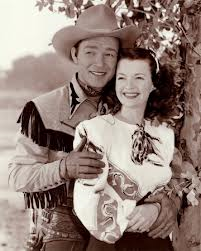
July 6: "King of the Cowboys" Roy Rogers – “Happy Trails to You” - died on this date in 1998.


-----
 
Roy Rogers, was born Leonard Franklin Slye on November 5, 1911 in Cincinnati, Ohio. An American icon, Rogers was one of the most heavily marketed and merchandised stars of his era, as well as being the namesake of the Roy Rogers Restaurants franchised chain.

He and his wife Dale Evans, his golden palomino, Trigger, and his German Shepherd dog, Bullet, were featured in more than 100 movies and The Roy Rogers Show. The show ran on radio for nine years before moving to television from 1951 through 1957. His productions usually featured a sidekick, often either Pat Brady (who drove a Jeep called "Nellybelle"), Andy Devine, or the crotchety George "Gabby" Hayes.

Rogers's nickname was "King of the Cowboys" and Evans's nickname was "Queen of the West.” The economic hardship of the Great Depression had the Slye family traveling from job to job picking fruit and living in worker campsites. Leonard, having seen the joy that his guitar and singing had brought to the destitute around the campfires, hesitantly told his father that he was going to pursue a living in music. With his father's blessing, he and cousin Stanley Slye went to Los Angeles and sought musical engagements as the Slye Brothers.

In 1932, a palomino colt was foaled in California named "Golden Cloud,” and later renamed "Trigger" in 1938 after he was acquired by Len. Len then went on tour with the "O-Bar-O Cowboys."

After his first wife Arline, died in childbirth, Rogers and Dale Evans married on New Year's Eve in 1947 at the Flying L Ranch in Davis, Oklahoma, where a few months earlier they had filmed Home in Oklahoma. Rogers and Evans remained married until Rogers's death in 1998. After four years of little success as a singer, he formed the Sons of the Pioneers with Bob Nolan and Tim Spencer, a Western cowboy music group, in 1934. The group hit it big with songs like "Cool Water" and "Tumbling Tumbleweeds.”

From his first film appearance in 1935, he worked steadily in western films, including a large supporting role as a singing cowboy while still billed as "Leonard Slye" in a Gene Autry movie. In 1938, when Autry temporarily walked out on his movie contract, Slye was immediately rechristened "Roy Rogers.” Slye's stage name was suggested by Republic Picture's staff after Will Rogers and the shortening of Leroy. and assigned the lead in Under Western Stars.

Rogers became a matinee idol and American legend. A competitor for Gene Autry as the nation's favorite singing cowboy was suddenly born. In addition to his own movies, Rogers played a supporting role in the John Wayne classic Dark Command in (1940. Rogers became a major box office attraction.

-----
For more about Roy and Dale, visit this Website:
 
 
####
 

July 6: Jazz legend Louis Armstrong- AKA Satchmo- "Wonderful World," "Hello Dolly!" – died on this date in 1971…


… born on August 4th, 1901, he died from a heart attack at the age of 69 in Carona, Queens, New York.  

-----
Louis Armstrong was born August 4, 1901 in New Orleans, Louisiana, the grandson of slaves. He spent his youth in poverty, in a rough neighborhood of Uptown New Orleans, known as “Back of the Town.” He attended the Fisk School for Boys, where he likely had early exposure to music.

He hung out in dance halls close to home, where he observed everything from licentious dancing to the quadrille. For extra money he also hauled coal to Storyville, the famed red-light district, and listened to the bands playing in the brothels and dance halls, especially Pete Lala's where Joe "King" Oliver performed and other famous musicians would drop in to jam.


After dropping out of the Fisk School at age eleven, Armstrong joined a quartet of boys who sang in the streets for money. But he also started to get into trouble. Armstrong developed his cornet playing seriously in the band of the New Orleans Home for Colored Waifs. Professor Peter Davis made Armstrong the band leader.

The Home band played around New Orleans and the thirteen-year-old Louis began to draw attention by his cornet playing, starting him on a musical career. Armstrong got his first dance hall job at Henry Ponce’s where Black Benny became his protector and guide. He hauled coal by day and played his cornet at night. He played in the city's frequent brass band parades and listened to older musicians every chance he got, learning from Bunk Johnson, Buddy Petit, Kid Ory, and above all, Joe "King" Oliver, who acted as a mentor and father figure to the young musician.

Later, he played in the brass bands and riverboats of New Orleans, and began traveling with the well-regarded band of Fate Marable, which toured on a steamboat up and down the Mississippi River.

Coming to prominence in the 1920s as an "inventive" trumpet and cornet player, Armstrong was a foundational influence in jazz. With his instantly-recognizable gravelly voice, Armstrong was also an influential singer, demonstrating great dexterity as an improviser, bending the lyrics and melody of a song for expressive purposes. He was also skilled at scat singing; vocalizing using sounds and syllables instead of actual lyrics.

Renowned for his charismatic stage presence and voice almost as much as for his trumpet-playing, Armstrong's influence extends well beyond jazz music, and by the end of his career in the 1960s, he was widely regarded as a profound influence on popular music in general.


In 1964, Armstrong knocked The Beatles off the top of the Billboard Hot 100 chart with "Hello, Dolly!,” which gave the 63-year-old performer a U.S. record as the oldest artist to have a number one song. His 1964 song "Bout Time" was later featured in the film Bewitched.

Armstrong was inducted into Rock and Roll Hall of Fame as an early influence. Armstrong was also posthumously awarded the Grammy Lifetime Achievement Award in 1972 by the Academy of Recording Arts and Sciences.

####